
青桐圆桌派|捷翔饮品王根祖:鲜饮行业的6大痛点及解决方案 - 知乎 (zhihu.com)
以下是提取的文字内容:在 5 月 10 日的“青桐圆桌派 ”之解码消费供应链活动上,「捷翔饮品」创始人王根祖、「米柚生活」创始人黎华 、「鲜世纪」创始人廖川、「叮咚买菜」创始人梁昌霖 四位资深创业者和「青桐资本」MD 张艺、「启承资本 」副总裁 Rita 杨颖姣一起,与现场 30 + 投资人及媒体记者朋友们进行了深度交流。
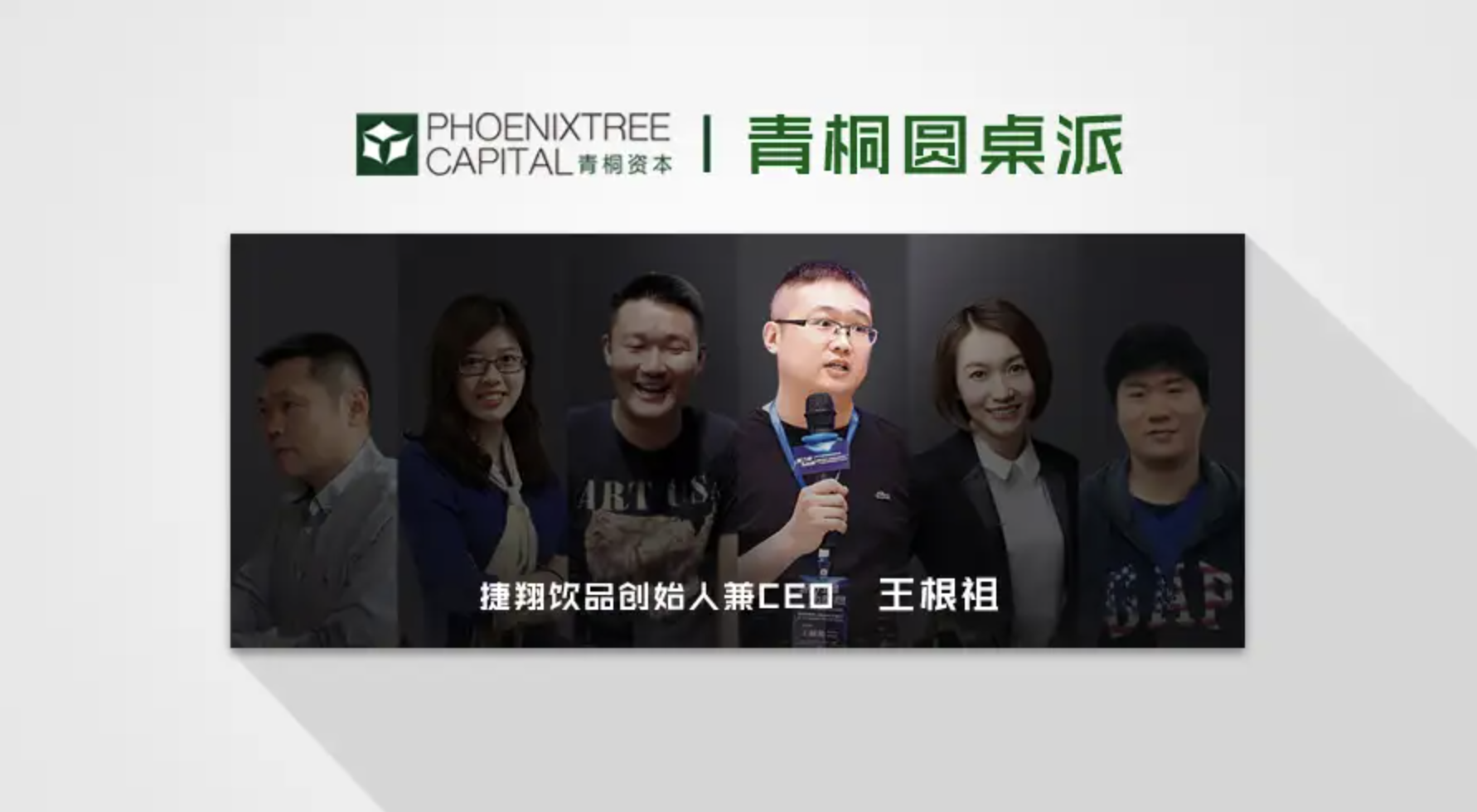
其中,「捷翔饮品」创始人王根祖分享了打通鲜饮 B 端产业链背后的大逻辑。「捷翔」已启动 B 轮融资,青桐资本担任独家财务顾问。
以下为王根祖现场演讲内容:
今天主要分享「捷翔」为鲜饮行业提供的解决方案。「捷翔」做新零售和茶饮板块供应链和基础设施,是现制冰淇淋和鲜饮的服务商。我们把自主研发的智能鲜饮机器免费租给大型的连锁,帮助线下拥有丰富人流的体验场景的合作方,通过冰品和饮品把流量变现。
一、 传统茶饮水吧的六大问题
传统茶饮门店普遍存在的六大问题,是所有店主们共同的烦恼: 1. 高企的房租成本。饮品价格上涨的幅度跑不赢房租上涨的幅度。 2. 人力成本。不断攀升的人工成本以及用工背后更大的、隐性的招聘、培训和管理成本。 3. 食品安全。这是悬在所有饮品企业头上的一把重剑。 4. 品质不稳定带来的客诉。因为茶饮产品的标准化程度低,完全依赖人工。
On May 10th, at the "Phoenix Tree Roundtable" activity of decoding the consumer supply chain, four senior entrepreneurs including Wang Genzu, the founder of "Shangjie Beverage Technology Beverage", Li Hua, the founder of "MIYOU Life", Liao Chuan, the founder of "Fresh Century", and Liang Changlin, the founder of "Dingdong Grocery Shopping", together with Zhang Yi, the MD of "Phoenix Tree Capital", and Rita Yang Yingjiao, the vice president of "Qi Cheng Capital", had in-depth exchanges with more than 30 investors and media reporters on the spot.
Among them, Wang Genzu, the founder of "Shangjie Beverage Technology Beverage", shared the underlying logic behind opening up the B-end industrial chain of fresh beverages. "Shangjie Beverage Technology" has launched Series B financing, and Phoenix Tree Capital serves as the exclusive financial advisor.
The following is the content of Wang Genzu's speech on the spot:
Today, I mainly share the solutions provided by "Shangjie Beverage Technology" for the fresh beverage industry. "Shangjie Beverage Technology" is engaged in the supply chain and infrastructure of the new retail and tea beverage sectors and is a service provider for freshly made ice creams and fresh beverages. We rent out our independently developed intelligent fresh beverage machines to large chains for free to help our partners with rich foot traffic in offline experience scenarios to monetize the traffic through ice products and beverages.
I. Six Problems of Traditional Tea and Beverage Bars
There are six common problems in traditional tea and beverage stores, which are the common troubles of all store owners:
High rent costs. The increase rate of beverage prices cannot keep up with the increase rate of rent.
Labor costs. The continuously rising labor costs and the larger hidden recruitment, training and management costs behind employment.
Food safety. This is a heavy sword hanging over all beverage enterprises.
Customer complaints caused by unstable quality. Because the standardization degree of tea beverage products is low and it completely depends on labor.
二、 “新鲜”需要彻底重构食品行业底层基础设施
我们预判未来20年中国食品领域有且只有唯一一个巨大的机会,就是新鲜。消费升级,越来越多的消费者会在意产品的鲜度。而目前大的食品企业基本上都是做长保质期非新鲜的产品。 关于新鲜,很多人认为这只是简单的产品变更,其实不然。
“新鲜”需要对整个基础设施的底层逻辑和生产方式进行彻底重构。先说说基础设施的变化:
1. 生产端,集中式大产能工厂→分布式小产能工厂。过去做非新鲜产品,靠的都是集中式大产能的工厂,规模越大,成本越有优势。但新鲜是一个时间概念,做完了马上就吃才是新鲜,如果你在上海做一个盒饭送到成都就是不新鲜了。所以将来建厂的逻辑一定是分布式连锁工厂,每个工厂的产能不需要那么大。
2. 仓储端,“高温杀菌+防腐剂”方式→极速冷冻技术。过去的常温储存走向急冻、冷冻和冷藏,原有的仓储系统也会彻底报废。
3. 物流端,常温长节奏→冷链短节奏。过去做长保质期常温品,物流节奏比较长,可以一个月一配半月一配,但是做新鲜食品则必须是一日一配或者一日两三配。这对物流的难度提升是几十倍而不只是几倍。
4. 销售端,需要能快速应对变化的情报系统。销售端要做销量预测,并根据预测来订货,因此每次采购都是一次赌博。如果你进了10份盒饭,那么要卖6份以上才能挣钱,否则6份挣到的钱抵不上剩余4份扔掉的钱。而对于非鲜货物,你可以提前一个月进货,进错进多都没关系,下个月还能卖。
综上,相比非新鲜食品,新鲜食品在生产端、仓储端、物流端、销售端都有更高的要求。原有的基础设施已不能满足新鲜食品的需求,基础设施需要彻底重构。连上一条一起翻译
II. "Freshness" requires a complete reconstruction of the underlying infrastructure of the food industry.
We predict that in the next 20 years, there will be only one huge opportunity in the Chinese food field, which is "freshness". With the upgrading of consumption, more and more consumers will care about the freshness of products. Currently, most large food enterprises mainly produce products with a long shelf life rather than fresh ones.
Regarding freshness, many people think it is just a simple product change, but it is not. "Freshness" requires a complete reconstruction of the underlying logic and production methods of the entire infrastructure. Let's first talk about the changes in infrastructure:
At the production end, from centralized large-capacity factories to distributed small-capacity factories. In the past, for non-fresh products, centralized large-capacity factories were relied on. The larger the scale, the greater the cost advantage.
But freshness is a concept of time. It is fresh only when it is eaten immediately after being made. If you make a boxed meal in Shanghai and send it to Chengdu, it is not fresh. Therefore, the future factory-building logic must be distributed chain factories, and the production capacity of each factory does not need to be so large.
At the storage end, from the "high-temperature sterilization + preservatives" method to the rapid freezing technology. The past storage at room temperature has changed to quick freezing, freezing, and refrigeration, and the original storage system will also be completely scrapped.
At the logistics end, from the long rhythm at room temperature to the short rhythm of the cold chain. In the past, for products with a long shelf life at room temperature, the logistics rhythm was relatively long, and it could be distributed once a month or once every half a month. But for fresh food, it must be distributed once a day or two or three times a day. This increases the difficulty of logistics dozens of times, not just a few times.
At the sales end, an intelligence system that can respond quickly to changes is needed. The sales end needs to make sales forecasts and place orders based on the forecasts. Therefore, each purchase is a gamble. If you buy 10 boxed meals, you need to sell more than 6 to make a profit. Otherwise, the money earned from selling 6 cannot offset the cost of throwing away the remaining 4.
For non-fresh goods, you can purchase them one month in advance, and it doesn't matter if you buy too much or make a mistake, as you can still sell them next month. In conclusion, compared with non-fresh food, fresh food has higher requirements at the production end, storage end, logistics end, and sales end. The original infrastructure can no longer meet the needs of fresh food, and the infrastructure needs to be completely reconstructed.
In conclusion, compared with non-fresh food, fresh food has higher requirements at the production end, storage end, logistics end, and sales end. The original infrastructure can no longer meet the needs of fresh food, and the infrastructure needs to be completely reconstructed.
三. “新鲜”需要“中央工厂+小门店”的新生产方式
说完了基础设施,再说说生产方式上的变化。过去中国的食品生产只有两种:一种是所有的操作工序和流程都在工厂完成,另一种是所有的工序和流程都在门店完成。工厂、门店都可以单独存在,大路朝天各走一边。
而我们认为未来会出现第三种生产方式——“中央工厂+小门店”,即不是所有工序都在工厂完成,也不是都在门店完成,而是需要由工厂和门店分工协作共同完成。比如面包店,它们90%以上的工序(面粉、糖、油的混合、醒发、揉面、成型)都是在中央工厂完成,做成冷冻的半成品后运送到终端,终端门店只是完成烤制这最后一道工序即可。
“中央工厂+小门店”会成为未来的主流生产方式,因为两者有各自无可取代的优势。中央工厂有三大好处:
1.采购规模化,品控更强。
2.无菌厂房生产,安全更有保障。门店显然没有无菌厂房,空气中就有着大量微生物。
3.工厂可以用大型的设备来实现更高效率的生产。
有了大工厂的支撑,门店就可以变小。门店变小之后的好处:
1. 不但节约高昂的房租成本,还能有更强的复制性可以开更多的店,从而满足消费者“又近又便利”的核心需求。
2.节约宝贵人工成本,以及背后的招聘、培训和管理成本。
3.产品品质更标准化,因为90%的半成品产品品质已经很稳定了。就像肯德基、麦当劳这些西式快餐,它们之所以能连锁全球,强大之处不在于门店,而在于后台强大的半成品工厂和供应链标准化能力。
4.大人流场景下快速出品。因为并不是从0开始做产品,而是只做最后一步工序
在中央工厂端,要尽可能做成深加工的半成品。10%也是半成品,90%也是半成品,我们要尽可能要做到99%,只留最后一步在门店。
在门店端也会有相应的要求:
1. 终端设备要做成“傻瓜”式。同样举面包店的例子,比如蛋挞要求上温200度下温100度烤8分钟,而菠萝包要求上温250度下温150度烤7分钟,显然员工很难记得住,也根本难以保证所有员工都执行到位。所以设备一定要做成触摸屏,设备要智能化傻瓜式。
2. 虽然只是最后一道工序在门店做,但却更需要强化客户体验。如把烤箱做成透明的,让消费者看到蛋挞的皮慢慢起酥,蛋液开始冒泡然后变焦,他们会更容易认为这是一个新鲜现制的好蛋挞。另外一点,就是烤箱要离消费者更近,距离越近体验越深,越远越无感。
II. “Freshness” requires a new production mode of “central factory + small stores”
After talking about the infrastructure, let's talk about the changes in the production mode. In the past, there were only two types of food production in China: one was that all the operation processes and procedures were completed in the factory, and the other was that all the processes and procedures were completed in the store. The factory and the store could exist independently, going their own separate ways.
We believe that in the future, a third production mode will emerge - “central factory + small stores”. That is, not all the processes are completed in the factory, nor are they all completed in the store. Instead, the factory and the store need to work together in a division of labor.
For example, in a bakery, more than 90% of the processes (the mixing of flour, sugar, and oil, proofing, kneading, and shaping) are completed in the central factory. After making frozen semi-finished products, they are transported to the terminal, and the terminal store only needs to complete the last process of baking.
The “central factory + small store” will become the mainstream production mode in the future because the two have irreplaceable advantages. The central factory has three major benefits:
1. Larger scale of procurement and stronger quality control.
2. Production in a sterile factory, which is more secure. Obviously, stores do not have sterile factories, and there are a large number of microorganisms in the air.
3. The factory can use large equipment to achieve more efficient production.
With the support of the large factory, the store can become smaller. The advantages of the store becoming smaller are as follows:
1. It not only saves high rent costs but also has stronger replicability, allowing more stores to be opened, thus meeting the core needs of consumers for being close and convenient.
2. It saves precious labor costs, as well as the costs of recruitment, training, and management behind it.
3. The product quality is more standardized because the quality of more than 90% of semi-finished products is already very stable. Just like Western fast food chains such as KFC and McDonald's, their strength lies not in the stores but in the powerful semi-finished product factories and supply chain standardization capabilities in the background.
4. It can quickly produce products in large - traffic scenarios. Because it is not starting from scratch to make products but only doing the last step.
At the central factory end, semi-finished products should be made into as deep - processed products as possible. Whether it is 10% or 90% semi - finished products, we should try to make it 99%, leaving only the last step in the store. There are also corresponding requirements at the store end:
1. The terminal equipment should be made into a “fool - proof” type. Taking the bakery as an example, for example, an egg tart requires an upper temperature of 200 degrees and a lower temperature of 100 degrees for baking for 8 minutes, while a pineapple bun requires an upper temperature of 250 degrees and a lower temperature of 150 degrees for baking for 7 minutes. Obviously, it is difficult for employees to remember, and it is impossible to ensure that all employees execute correctly. So the equipment must be made into a touch screen, and the equipment should be intelligent and fool - proof.
2. Although only the last step is done in the store, the customer experience needs to be strengthened even more. For example, making the oven transparent so that consumers can see the crust of the egg tart slowly become crispy and the egg liquid start to bubble and then turn brown. They will more easily think that this is a fresh and freshly made good egg tart. Another point is that the oven should be closer to the consumers. The closer the distance, the deeper the experience, and the farther away, the less sense.
四.水果行业正发生着深刻变革
1、 果肉时代到来
水果行业正在发生深刻的变化,由“整果”变成“果肉”。水果行业最大的成本其实来自于运输仓储成本。过去茶饮店都是买整果,整果连皮、连核、连囊一起运,运到后你还是要扔掉。而果肉则是去皮、去核、去囊运输,效率更高成本更低。而且整果运输,果间空隙会发生碰撞,导致损耗急剧增加。
我们认为,B端的商家会率先大量采用果肉。这是因为:
(1) 急冻果肉供应稳定,品质稳定(都是在水果大量上市时,成熟度最好的产品)。
(2) 解决了门店加工的食品安全问题。
(3) 减少门店空间和人工需求。
在,C端用户也会大量购买果肉果切,既能满足人“越来越懒”的需求,又能满足少量多品种一次吃完的需求。
2、 冷链网络发展
水果能够起量的话,对冷链网络会有很大的贡献。就像电商之于快递,如果不是因为电商包裹需要快递,四“通”一“达”和顺丰不可能蓬勃发展。
纵观行业现有冷链网络,没有连成网信息化程度很低,存在大量混装的情况,其中主要原因就是对冷链网络还没有大规模使用的需求。这个需求一旦有了,会促进冷链业的高速发展。
我们认为对冷链配送需求最大的产品品类就是水果,水果是最容易起量的。几乎所有的餐厅、KTV、茶饮店、鲜榨果汁店都要用到水果。
五.“破界”鲜饮行业 解决设备、原料、体验三大痛点
「捷翔」是第一家把“第三种生产方式”引入鲜饮行业的公司,我们研发了全世界第一台果茶机、全世界第一台奶盖机、全世界第一台单杯榨汁机,包括像果茶浆、水果冰杯、奶盖浆、冷冻水果拼配包这些都是我们自己首创的。这其实是“破界”产生的巨大价值。
过去这个行业做设备的只做设备不做原料,做原料的只做原料不做设备。做设备和原料的都不开店,而开店的又都不懂设备和原料。而「捷翔」最大的优势就是站在设备和原料、体验三个领域之上,系统性解决这个行业的痛点,我们才得以快速研发出这么多首创产品。
2017年7月,「捷翔」第一台智能果茶机上市,已经投放了1000多台。高峰时段一台设备一天平均能做到500-600杯,好的门店可以做到1000杯以上。一般手工制作的茶饮店要达到这个产能,则至少需要10名以上员工、每天2000元以上的房租、10-20万的装修、30万-40万的设备投入。而「捷翔」只需要1平米场地2个人就可以做到这个产能。还有就是我们的速度很快,只花了大半年时间,做到了1000多家店,一般果茶店则需8-10年才可以做这么多的店铺数量。
之所以能实现这样的产能,是因为我们遵循“简一律”,把多个原料变成一种原料,把多个设备简化成一个设备,把多个操作步骤简化成一个操作步骤。业内一般生产水吧设备,都是像生产传统厨房里面的炒锅、煎锅,而「捷翔」则是第一个在鲜饮界发明微波炉的人,微波炉是不能做炒菜的,但它可以翻热半成品。我们发明了配套这个机器使用的半成品,让终端可以快速出品。
在给影院提供果茶机的过程中,我们发现了一个问题:果茶需要水果,但影院的门店没有权力采购水果,也没有加工水果的空间和人。于是我们就开始提供极速冷冻的新鲜水果。这个水果的量超出了我们的想象。从2017年10月到2018年1月,从1000+箱/月到18000+箱/月,完全是指数级别的增长,几个工厂做水果包都赶不上我们一家销售,还天天缺货。
除了传统的影院、便利店找我们买这种冷冻水果,还有很多专业的茶饮店也来找我们买冷冻的水果。这又是什么原因呢?假设你在20个城市有100家茶饮店,水果的供应链将是一个非常大的问题,是由总部统一采购再配送到各个门店?还是让每个门店自己就近采购?如果让每一个门店自己买,100家店将有100个供应商、100个采购、100个品控。水果各个地区的售价不同,价格的季节性波动也特别大。而且采购的跑冒滴漏会很多,在门店加工微生物也一定是超标的。
我们发现要解决水果这些问题,用急冻水果或者秒冻水果是最好的,市场表现也完全支撑这一点。现在很多专业的茶饮店,也在采购「捷翔」的冷冻水果拼配包,我们的中央工厂把水果做成独立的小包装或者水果杯,提供给茶饮店。
六.「捷翔」新定位:新零售新茶饮的基础设施服务商
「捷翔」的新定位,就是做新零售和新茶饮的基础设施服务商,主要从四个维度来服务客户:
1.研发智能化傻瓜式设备。我们用免费租赁的模式,跟中国线下质量最高、人流量最大的吧台合作。这些吧台是稀缺的宝贵的资源阵地。
2.深加工半成品原料。设备铺出去之后,我们会给设备持续不断地提供大量半成品原料,虽然原料利润率低,但只要乘以一个长时间维度,规模将变得很大。我们做整个城市的水果加工间,每家门店不需要加工间和水果加工师傅。
3.大宗农产品的备货&加工。在大量半成品原料中,需要大量新鲜的水果,我们提供水果大宗农产品备货和加工。比如夏天西瓜是x元的时候,我们就把整个一年的西瓜备下来,到冬天我们并不谋求比x元更贵的价格卖出,甚至我们会卖得更便宜。但是我们用的是夏天质量最好成熟度最高的产品,我们也有一定的空间。
4.前置仓+冷链网络。不仅把货提供给连锁总部,还帮他们把货安全、快捷、低成本地送到每一个门店。
七.「捷翔」共享创新中心:加速解决鲜饮创新问题
未来「捷翔」只想做toB,但是to C我们希望用孵化的方式去执行。解决了供应链的问题,最后讲一下产品创新。
如何让饮品快速创新,始终走在潮流前沿?我们特地成立了“共享创新中心”,只服务于连锁店和想开连锁店的老板们,提供品牌创新和产品创新两方面的服务。「捷翔」的方法论是:汇聚创新全要素,支持连锁的高效创新。
“前端平台化”,提供包括设计、宣传、商铺租赁、知识产权申请、互联网营销专业人才、包装材料、食材中心等资源对接。
1.情报局负责在社交网络上搜集全世界当下最火门店的装修风格和最火爆款产品,然后每周发布在公众号上与订阅者分享,为创新提供情报和源泉。
2.应用研发中心里有各种各样的设备,可以进行拆单式创新,通过选择不同的杯子、茶、水果,就可以做一个创新产品。
3.感官实验室和检测中心可以做糖度、酸碱度、微生物的检测等等。
4.小试生产线提供足以生产50公斤、100公斤小批量的原料,让你做评测、盲测,市场门店小范围检验。
5.工业化智囊团提供咨询服务,告诉你这个方案能不能实现,需要什么样的杀菌条件,需要什么工艺,因为很多门店的人对食品工业生产并不了解。
前端的免费是为了后端做三件事:
1. 你需要的设备我们帮你研发、生产、并且免费租赁给你;
2. 持续不断地帮你去生产所需的半成品原料;
3. .利用我们的冷链网络配送到你的各个门店,支撑连锁的高速扩张和拓展。
总结一下,针对鲜饮领域存在的六大痛点问题,「捷翔」主要通过优化供应链和成立创新中心这两个方式来解决。
「捷翔」已获得青桐资本和盛景嘉成的投资。在资本的帮助下,我们又在2017年研发了新的智能果昔机,希望给我们的客户带来更新奇更便捷更健康的体验。到2025年,我们的果昔机已发展到第四代产品!
IV. The fruit industry is undergoing a profound transformation
1. The arrival of the pulp era
The fruit industry is experiencing profound changes, shifting from “whole fruits” to “fruit pulp”. The biggest cost in the fruit industry actually comes from transportation and storage costs. In the past, tea shops used to buy whole fruits, which were transported with peel, core, and sacs, and after arrival, they would still be discarded. Fruit pulp, on the other hand, is transported after being peeled, pitted, and removed of the sacs, with higher efficiency and lower cost. Moreover, during whole fruit transportation, the gaps between fruits cause collisions, leading to a sharp increase in losses.
We believe that businesses in the B - end will be the first to adopt fruit pulp in large quantities. This is because:
(1) The supply of frozen fruit pulp is stable, and the quality is stable (the products are from fruits with the best maturity during the peak season).
(2) It solves the food safety problem in store processing.
(3) It reduces the store space and labor demand.
In addition, consumers in the C - end will also purchase fruit pulp and fruit cuts in large quantities, which can meet the need for people to be increasingly lazy and the demand for consuming multiple varieties in small amounts at once.
2. The development of the cold chain network
If fruit can be produced in large quantities, it will contribute significantly to the cold chain network. Just like e - commerce and express delivery, if it weren't for the need for e - commerce packages to be delivered by express, the “Four - Express” and “One - Delivery” and SF Express would not have developed vigorously.
Looking at the existing cold chain network in the industry, it is not connected into a network and has a low degree of informatization. There are a large number of mixed - loading situations. The main reason for this is that there is no demand for large - scale use of the cold chain network. Once this demand is met, it will promote the high - speed development of the cold chain industry.
We believe that the product category with the greatest demand for cold chain distribution is fruit. Fruit is the easiest to achieve large quantity. Almost all restaurants, KTVs, tea shops, and fresh juice shops use fruit.
V. “Breaking the boundaries” in the fresh beverage industry: solving the three pain points of equipment, raw materials, and experience
「Shangjie Beverage Technology」 is the first company to introduce “the third production mode” into the fresh beverage industry. We developed the world's first fruit tea machine, the world's first milk cap machine, and the world's first single - cup juice machine. All products such as fruit tea pulp, fruit ice cups, milk cap pulp, and frozen fruit blend packages were first created by us. This is actually the great value generated by “breaking the boundaries”.
In the past, companies in this industry that made equipment only focused on equipment and not on raw materials, and those that made raw materials only focused on raw materials and not on equipment. Those who made equipment and raw materials did not open stores, and those who opened stores did not understand equipment and raw materials. The greatest advantage of「Shangjie Beverage Technology」 is that it stands above the three fields of equipment, raw materials, and experience, and systematically solves the pain points of this industry. Thus, we were able to quickly develop many first - innovative products.
In July 2017, the first intelligent fruit tea machine of 「Shangjie Beverage Technology」 was launched, and more than 1000 units have been put into use. During peak hours, one machine can on average produce 500 - 600 cups per day, and good stores can produce more than 1000 cups. Generally, a manually - made tea shop needs at least 10 employees, a rent of more than 2000 yuan per day, a decoration cost of 100,000 - 200,000 yuan, and equipment investment of 300,000 - 400,000 yuan to achieve this production capacity.「Shangjie Beverage Technology」 only needs a 1 - square - meter space and 2 people to achieve this production capacity. Also, our speed is very fast. It took only more than half a year to reach more than 1000 stores. Generally, it takes 8 - 10 years for fruit tea shops to reach such a large number of stores.
The reason for such production capacity is that we follow the “simplification principle”, turning multiple raw materials into one raw material, simplifying multiple equipment into one equipment, and simplifying multiple operation steps into one operation step. Generally, the equipment for water bars in the industry is like the production of traditional kitchen pans and frying pans.「Shangjie Beverage Technology」 is the first to invent the microwave in the fresh beverage industry. Although microwave cannot be used for cooking, it can heat semi - finished products. We developed semi - finished products for this machine, allowing the terminal to quickly produce products.
During the process of providing fruit tea machines to cinemas, we found a problem: fruit tea requires fruit, but the store in the cinema has no power to purchase fruit and has no space and personnel for fruit processing. So we started to provide frozen fresh fruit. The quantity of this fruit exceeded our imagination. From October 2017 to January 2018, from more than 1000 + boxes per month to more than 18000 + boxes per month, it was completely an exponential growth. Several factories making fruit packages couldn't keep up with our sales, and there was a shortage every day.
In addition to traditional cinemas and convenience stores buying this frozen fruit from us, many professional tea shops also come to buy frozen fruit. What is the reason for this? Suppose you have 100 tea shops in 20 cities, the fruit supply chain will be a very big problem. Will it be the headquarters that uniformly purchases and then distributes to each store? Or let each store purchase near the store? If each store buys by itself, 100 stores will have 100 suppliers, 100 purchases, and 100 quality controls. The prices of fruits vary in different regions, and the seasonal price fluctuations is also very large. Moreover, there are many problems such as leakage in the purchase, and the microorganisms in store processing are definitely unqualified.
We found that using frozen fruit or instant frozen fruit is the best way to solve these problems, and the market performance fully supports this. Now many professional tea shops are also purchasing the frozen fruit blend packages of 「Shangjie Beverage Technology」. Our central factory makes fruits into independent small packages or fruit cups and provides them to tea shops.
VI. The new positioning of 「Shangjie Beverage Technology」: An infrastructure service provider for new retail and new tea drinks
The new positioning of 「Shangjie Beverage Technology」 is to be an infrastructure service provider for new retail and new tea drinks, serving customers from four dimensions:
1. Develop intelligent fool - proof equipment. We use the free - rental mode to cooperate with the bar counter with the highest quality and the largest traffic offline in China. These bar counters are precious and scarce resources.
2. Process semi - finished raw materials. After the equipment is laid out, we will continuously provide a large amount of semi - finished raw materials to the equipment. Although the profit margin of raw materials is low, as long as multiplied by a long time dimension, the scale will become large. We make fruit processing rooms for the whole city, and each store does not need a processing room and fruit processing workers.
3. Preparation and processing of bulk agricultural products. Among a large amount of semi - finished raw materials, a large amount of fresh fruit is needed. We provide bulk agricultural product preparation and processing of fruit. For example, when watermelons are x yuan in summer, we prepare the whole year's watermelons. In winter, we do not seek to sell at a price higher than x yuan, and even we may sell at a lower price. But we use the products with the best quality and highest maturity in summer, and we have a certain space.
4. Pre - warehouse + cold chain network. We not only provide goods to the chain headquarters but also help them deliver the goods safely, quickly, and at a low cost to each store.
VII. The sharing innovation center of 「Shangjie Beverage Technology」: Accelerating the solution of fresh beverage innovation problems
In the future, 「Shangjie Beverage Technology」 only wants to do business with the B - end, but for the C - end, we hope to implement it through incubation. After solving the supply chain problem, finally, let's talk about product innovation.
How can beverage products be innovated quickly and always be at the forefront of the trend? We specially established the “Sharing innovation center”, which only serves chain stores and bosses who want to open chain stores, providing services in two aspects: brand innovation and product innovation. The methodology of 「Shangjie Beverage Technology」 is: gather all elements of innovation and support the efficient innovation of chains.
“Front - end platformization” provides resources such as design, publicity, store rental, intellectual property application, professional talents in Internet marketing, packaging materials, and food ingredient center for docking.
1. The intelligence agency is responsible for collecting the decoration style and the most popular products of the most popular stores in the world on social networks, and then publishing them on the public account every week to share with subscribers, providing intelligence and source for innovation.
2. The application research and development center has various equipment, which can carry out split - order innovation. By choosing different cups, tea, and fruits, an innovative product can be made.
3. The sensory laboratory and the testing center can conduct tests such as sugar content, pH value, and microorganism detection.
4. The small - trial production line provides raw materials sufficient for small - batch production of 50 kg and 100 kg, allowing you to conduct evaluation, blind test, and test in a small range of market stores.
5. The industrial think tank provides consulting services, telling you whether this plan can be implemented, what kind of sterilization conditions are needed, and what kind of process is required, because many people in stores do not understand the food industry production.
The free front - end is for the back - end to do three things:
We help you develop, produce, and rent the equipment you need for free;
Continuously help you produce the required semi - finished raw materials;
Use our cold chain network to deliver to your stores, support the high - speed expansion and development of the chain.
In conclusion, for the six pain points in the fresh beverage industry, 「Shangjie Beverage Technology」 mainly solves them through optimizing the supply chain and establishing the innovation center.
「Shangjie Beverage Technology」has received investment from Phoenix Tree Capital and Shengjing Fortune.
With the help of capital, we developed a new intelligent smoothie machine in 2017, hoping to bring our customers more novel, convenient and healthy experiences. By 2025, our smoothie machine has developed into the fourth generation of products!
